
Fasteners Screw Head Burrs Causes and Solutions
Head burrs — thin fins or flash of excess metal around the head periphery — are a common cold heading defect that causes serious trouble downstream. Burrs interfere with seating, damage mating surfaces, and can even cut assembly workers' fingers. Here's how we analyze and eliminate this defect on our production floor.
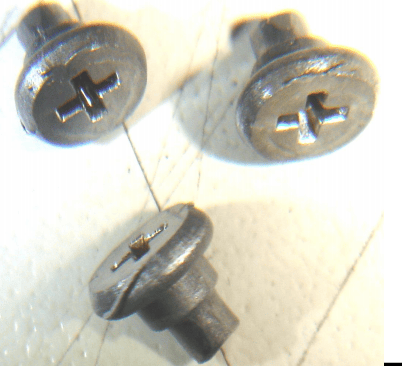
What Causes Head Burrs?
Through production troubleshooting, we've pinned down three root causes:
1. Raw material too soft If the wire is softer than specified — often due to over-annealing or a wrong material batch — it flows too easily under the heading force. The excess metal squeezes into the tiny gap between punch and die, forming a flash ring around the head.
2. Dull die cutting edge The die's cutting edge trims the blank before and during forming. Once this edge wears down, it can't shear the material cleanly. Instead of a crisp cut, the metal tears and smears outward, leaving burrs attached to the head.
3. Excessive cutting allowance (header too large) If too much material is fed into the header (打头太大) — meaning the pre-form blank volume exceeds what the die cavity needs — the surplus metal has nowhere to go and escapes as a burr around the head edge.
How to Fix It
- If the material is too soft — switch to a correct material batch, and investigate the annealing process to make sure wire hardness stays within specification before it reaches the header.
- If the die cutting edge is dull — replace the die or regrind the cutting edge to restore a sharp, clean shearing action.
- If the cutting allowance is too much — check and adjust the feeding dimensions (blank length and header volume) so the material volume matches the die cavity exactly.
Our on-floor process: stop and quarantine the lot → check wire hardness, die edge condition, and feed dimensions → identify the cause → apply the matching correction → run trial parts and inspect the head edge under magnification → resume production.
Prevention Tips
- Verify wire hardness certificates on every incoming lot
- Add die edge inspection to the tool maintenance schedule — regrind before burrs appear, not after
- Audit blank feed length whenever switching products or materials
- Add burr checks to patrol inspection, especially after tool changes
Why Buyers Should Care
Burrs mean screws that don't seat flush, scratched mating parts, and assembly delays. A supplier who controls material hardness, die sharpness, and feed dimensions delivers burr-free heads — no secondary deburring costs passed on to you.
Please feel free contact us if you require high-quality non-standard screws,our fastener screws undergo 100% inspection before shipment

