
Causes of Indentations on Screw Heads and Corrective Measures
Head indentation marks are pressed-in dents or scratches on the screw head surface — often appearing around the recess or across the head face. They may look like a minor surface issue, but for visible applications like electronics, furniture, and consumer products, these marks lead directly to rejection. Here's how we handle this defect on our production floor.
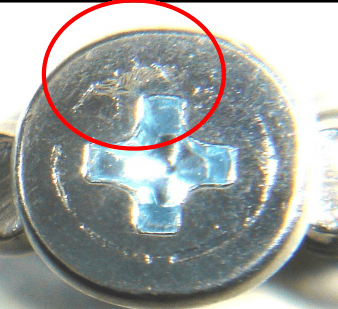
What Causes Head Indentation Marks?
Based on our shop-floor experience, two root causes account for almost all cases:
1. Iron chips and debris trapped on the die During high-speed heading, tiny metal particles from worn tools accumulate on the die surface. When the next blank is formed, these hard particles get pressed into the soft head material, leaving distinct dents or scratch-like marks on the head face.
2. Ejector pin too thin The ejector pin pushes the finished screw out of the punch after forming. If the pin diameter is too small for the head size, the ejection force concentrates on a tiny contact area — pressing a visible ring or dent into the head surface, often right around the recess.
How to Fix It
- If chips are stuck on the die — stop the machine and clean the die surface thoroughly; then set up a regular die-cleaning schedule (e.g., every 2–4 hours depending on volume) so chips never accumulate enough to mark parts.
- If the ejector pin is too thin — replace the ejector pin with one of proper diameter, matching the pin size to the head dimensions so ejection force spreads evenly.
Our on-floor process: stop and quarantine the lot → inspect the die and ejector pin → identify which cause applies → apply the matching correction → run trial parts and visually verify the head surface under magnification → resume production with increased patrol checks.
Prevention Tips
- Add die cleaning to the operator's standard work checklist, not just when defects appear
- Inspect and replace ejector pins preventively — a worn or undersized pin marks parts long before it fails
- Keep the header area clean; oil and debris accelerate chip buildup
- Use visual inspection (or AOI machines) on finished heads for high-appearance products
Why Buyers Should Care
For visible fasteners, head marks mean rejected shipments and complaints from your customers. A supplier with disciplined die-cleaning routines and proper ejector pin management keeps head surfaces clean and consistent — lot after lot.
Please contact us if you are looking for high-quality custom screws, our screws undergo 100% inspection before shipment.

