Why passivation and head design matter more than the spec sheet suggests
A customer asked us recently: "Why do your SS304 self-tapping screws mention passivation? Isn't stainless steel already corrosion resistant?"
Fair question — and the answer explains a lot of premature rust failures.
What passivation actually does
SS304 resists rust because chromium forms a protective oxide layer on the surface. But during heading and thread rolling, free iron particles from tooling can embed in that surface. Left in place, they become rust starting points — even on "stainless" parts.
Passivation (per ASTM A967, typically citric or nitric acid) dissolves the free iron and lets the oxide layer rebuild, uniform and intact. Skip this step, and you may see rust spots within months. Do it right, and the screw performs for years in humid, coastal, or outdoor environments.
Why the slotted hex washer head design works
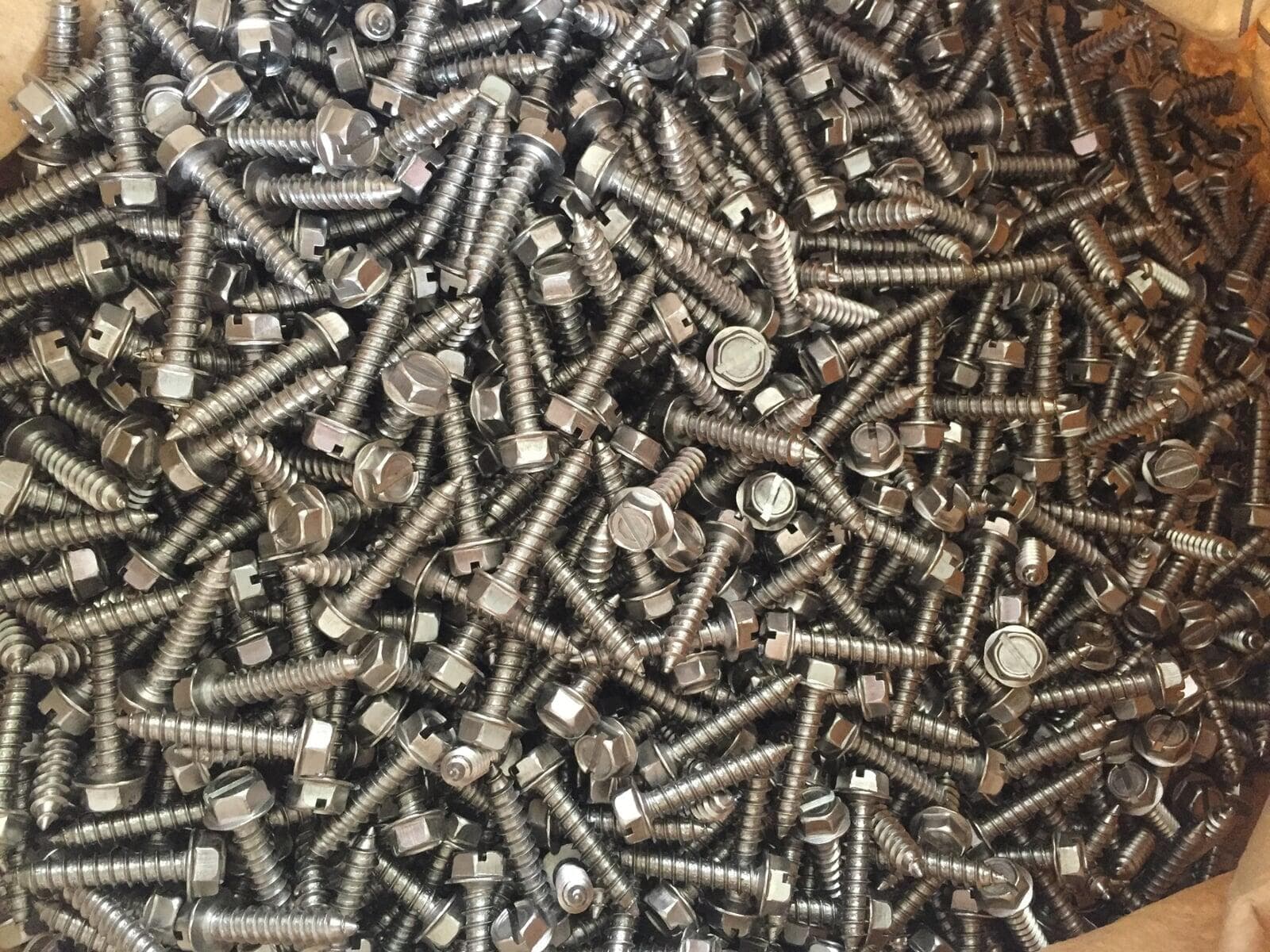
This one head combines three practical advantages:
◦ Hex drive — high torque with a wrench or socket, no cam-out ◦ Slotted drive — flat screwdriver works when the right bit is missing on site ◦ Integrated washer face — larger bearing area, no separate washer needed
Typical applications
HVAC ductwork, solar mounting frames, electrical enclosures, and coastal installations — anywhere a vibration-resistant, corrosion-proof self-tapping fastener is needed.
Before you order, ask your supplier:
- Is passivation documented per ASTM A967?
- Is a mill certificate (MTC) available per batch?
- What salt spray test data supports the surface treatment?
A supplier who answers all three quickly usually controls the process, not just resells the part.
Bottom line: "SS304, passivated" is not a marketing phrase — it is an alloy plus a process working together. Browse our slotted hex washer head self tapping screws in passivated SS304 with batch traceability.

