
A Complete Guide to Choosing the Right Screw Threads
Screws are essential fasteners in industrial manufacturing, machinery assembly, construction, and equipment installation. Different materials and applications require different screw thread types to ensure reliable fastening and optimal performance.
In this guide, we introduce 11 common screw thread types, their features, and typical applications to help you choose the right fasteners for your projects.
1. What Are Screw Thread Types?
A screw thread refers to the helical structure on a screw shaft. It determines how a screw engages with materials and affects fastening strength, compatibility, and installation performance.
Choosing the correct thread type is essential for reliable fastening.
2. 11 Common Types of Screw Threads
1. Metric Coarse Thread
Metric coarse threads feature relatively large thread spacing and are widely used for general fastening. For example, M3 × 0.5 is a standard metric coarse thread.
Applications: Machinery, equipment assembly, and general industrial fastening.
2. Metric Fine Thread
Metric fine threads have smaller thread pitches than coarse threads, providing finer adjustment and precise fastening.
Applications: Precision machinery, automotive components, and applications requiring accurate fastening.
3. Unified Inch Threads (UNC / UNEF)
UNC (Unified National Coarse) and UNEF (Unified National Extra Fine) are inch-based thread standards with a 60-degree thread angle.
Applications: Imported machinery, automotive equipment, and products manufactured to American thread standards.
4. Pipe Threads
Common pipe thread types include PT, BSP, and G threads. Depending on the standard, pipe threads may be tapered or parallel and are used for connecting pipes and fittings.
Applications: Water pipes, gas lines, and fluid connection systems.
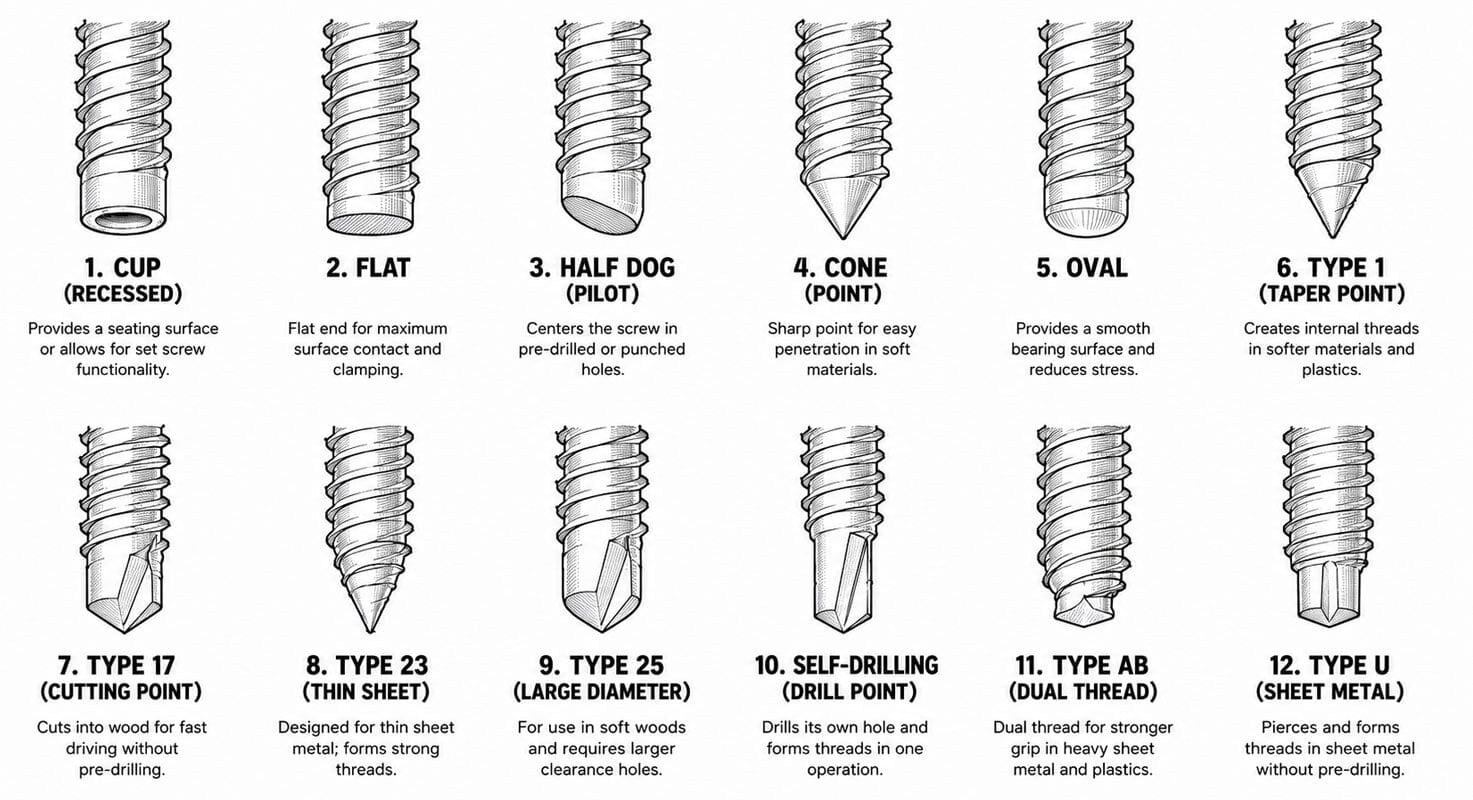
5. Self-Tapping Pointed Threads
These screws feature a sharp pointed tip that helps penetrate materials and form mating threads during installation.
Applications: Furniture manufacturing, plastic components, and thin sheet materials.
6. Self-Tapping Blunt Threads
Blunt-tail self-tapping screws feature a flat or blunt end. Common designations include B, PB (Pan Head), and KB (Countersunk Head).
Applications: Electrical equipment, metal components, and applications requiring a clean finished appearance.
7. Sheet Metal Screw Threads
Sheet metal screws are designed with threads suitable for fastening thin metal sheets and similar materials. Common types include Type A and Type B.
Applications: Metal enclosures, electrical equipment, and sheet metal assembly.
8. Self-Drilling Screw Threads
Self-drilling screws feature a drill-shaped point that can drill a pilot hole and form threads in one operation, improving installation efficiency.
Applications: Steel structures, metal roofing, and curtain wall systems.
9. Wood Screw Threads
Wood screws feature relatively coarse threads designed to provide strong grip in wooden materials.
Applications: Furniture, woodworking, and wooden structures.
10. Drywall Screw Threads
Drywall screws are designed for fastening drywall panels. Their thread designs help provide secure engagement with the supporting material.
Applications: Drywall installation, interior construction, and partition systems.
11. Triangular Self-Tapping Threads
These screws feature a triangular thread profile designed for self-tapping applications. Their thread geometry helps form threads and provides space for material displacement during installation.
Applications: Plastic components, thin sheets, and electronic equipment.
3. How to Choose the Right Screw Thread Type
Selecting the right screw thread depends on the material, installation method, and fastening requirements.
Material: Wood screws for wood, self-drilling screws for suitable metal applications, and self-tapping screws for plastics and thin sheets.
Precision: Metric fine threads for applications requiring finer thread pitch.
Installation speed: Self-drilling screws for faster installation.
Sealing requirements: Appropriate pipe threads for pipe and fluid connections.
Choosing the correct thread type helps improve fastening performance and product reliability.
4. Find the Right Screws for Your Application
Choosing the right screw involves considering thread type, material, dimensions, head style, and surface treatment.
As a professional screw and fastener manufacturer, we provide a variety of fastening solutions for industrial and commercial applications.
Whether you need metric screws, self-tapping screws, self-drilling screws, wood screws, or customized fasteners, we can help meet your requirements.
Contact us today to discuss your fastening needs and get a competitive quotation!

